
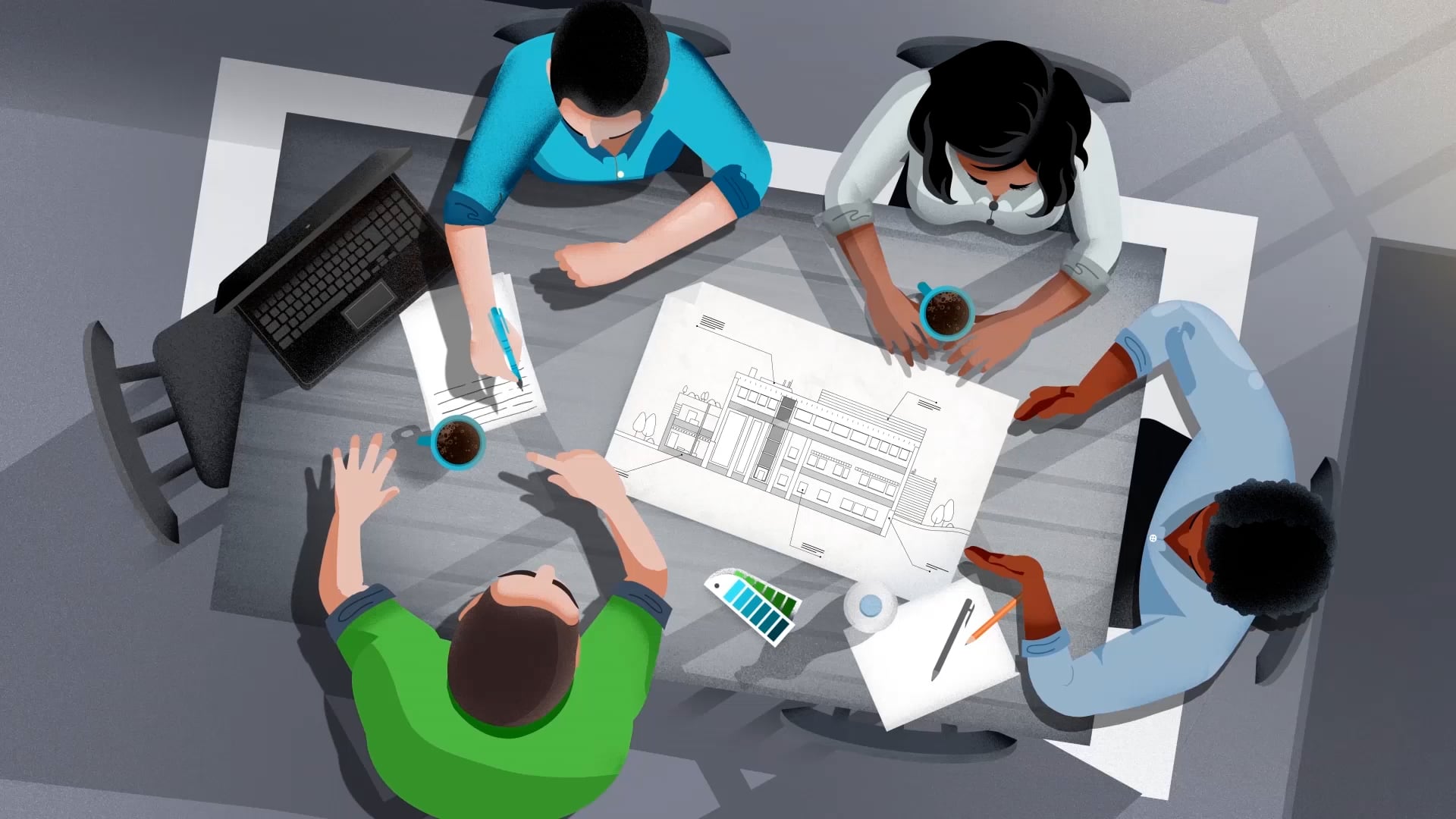
When it comes to video creation, companies have 2 main options: Outsourced and In-House. For companies focused on quality and a streamlined creation process from start to finish, they take the outsourced route. For companies willing to be scrappy and produce video on a budget, in-house creation might be a good fit. Though companies may save on costs with in-house creation, the overhead, time, and effort it takes might not be worth the hassle when compared to an investment in professionally crafted video.
1. Outsourced Video Creation:
Big companies, amazing brands, and leaders trust outsourced partners to bring new light to their products. They don’t have time to make videos – they need to focus on their offerings and leave the mastery of video creation to the experts.
A quality video partner will take the time to understand a client’s needs and how video will support their goals. With any video, the message needs to be captivating and on-brand. The addition of a third-party to refine this message and pair it with engaging visual elements can prove to be
invaluable.
Companies work with video experts to create many types of video, but in many cases, the focus is on producing high-quality pillar content. These evergreen pieces need to be spectacular since they are meant to stay relevant into the foreseeable future. With a dedicated focus on excellence from a video partner, these videos become a powerful force for delivering a self-service experience.
External video agencies have the benefit of a larger, often more well-rounded team that’s produced a lot of videos. They know what they’re doing and it means they’re often better at estimating timelines and budgets.
– Mathew King, Video Production Manager, Vidyard
Our clients know that high-quality video creation converts leads, closes business, and inspires the masses. Quality video production won’t go away and there is no reason to position your brand for anything less than stellar quality and proper representation when working with an outsourced partner.
– Derek Gerber
2. In-House Video Creation:
Since many companies are new to video, they have to be scrappy and learn as they go. For them, building video standards and processes are a must for consistency and reinforcing a brand.
The person or team put in charge of video can’t be siloed and must work closely with all departments to understand where video is needed to support the buyer journey. This is a big undertaking and difficult to execute if a company is just getting started in video. Without the proper resources or support, many of these videos don’t represent the brand effectively and become more of a headache than a useful asset.
Videos produced in-house can come in many forms including simple screen captures, basic interview recordings, product demos, and feature overviews. In some cases, companies prefer these less scripted videos since they believe it brings a sense of realness to the viewer.
Challenges:
Scaling in-house video creation: Companies haven’t adapted quickly enough to make their video creation process scalable. There’s typically a slow delivery time because of a lack of general understanding and execution around video or lack of team members.
The number of videos we’ve either conceptualized or scripted far exceeds the speed at which we can produce them.
– Laura Smous, Sr. Director of Product Marketing, Adroll
Types Of Videos SaaS, B2B Software, and Technology Companies Create
With many use cases for videos and a variety of goals you want to achieve with them, it’s important to be aware of the types of effective videos you can create. Through our research and experience crafting hundreds of videos, we’ve nailed down the 4 most common types that SaaS and B2B software companies find success with. For an even deeper dive on the types of videos and creation processes below, head on over to our webinar.
Explainer Videos
Pillar content used to differentiate a brand and distill complex products or services down to an understandable level.
Creation Process: Typically executed by an outsourced team of strategic messaging and animation experts. After working closely with a client to understand their needs, the video partner takes the lead and makes it a Frustration-Free™ process.
Customer Onboarding Videos
A suite of videos designed to welcome customers and help them get familiar with a product in a scalable way.
Creation Process: First define the key areas of an onboarding experience and combine screen captures with audio instructions related to the relevant actions you want customers to take.
Demo/Product Feature Videos
Videos designed to showcase your product in action and guide users on how to use it best.
Creation Process: Define the areas of your product you want to highlight or explain and either use animation or screen capture paired with voice recordings tocraft video around these key areas.
Client Testimonial Videos
Used to provide social proof around your product or service.
Creation Process: Reach out to satisfied customers and record their thoughts about how your software positively impacted their business. In many cases, these are shot and edited by video experts but can be handled in-house with basic equipment.